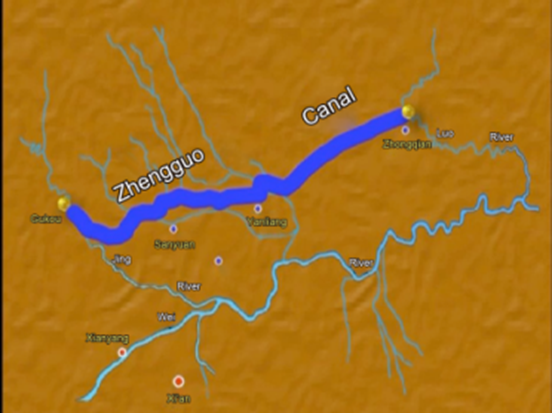
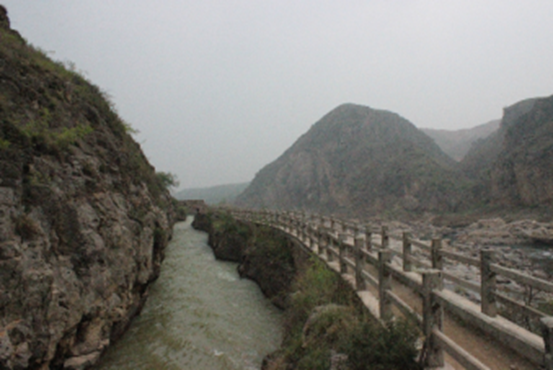
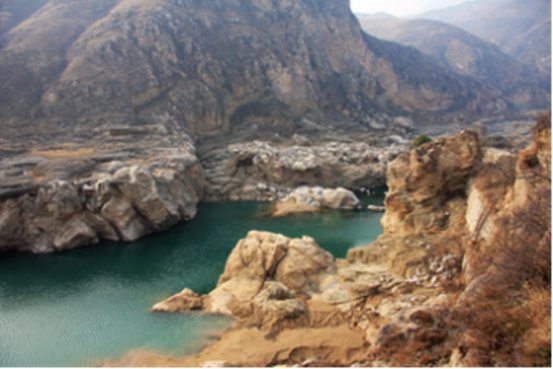
Construction of the Zhengguo Canal, a large dam-free water diversion irrigation project, began in 246 BC. It played an important role in the prosperity of the Qin Kingdom (770 BC to 221 BC) and the unification of China under the Qin Dynasty (221 BC to 207 BC) .
Located in the central plain of present-day Shaanxi Province, the Zhengguo Canal, which is around 150 km long, diverts water from the Jing River in the West to the Luo River in the east. Since its completion more than 2,200 years ago, a large number of canals were built, namely Bai Canal, Zhengbai Canal, Fengli Canal, Wangyushi Canal, Guanghui Canal and Jinghui Canal, and most of these continue to function for irrigation purposes.
The Jing River, which is the source of the Zhenguo Canal, is well-known for its high concentration of sediment, with an annual sediment discharge of 265 million tons. In ancient time, people already knew that river sediment had rich organic matters and could be silted to fertilize lands. Thanks to the construction of the Zhengguo Canal, water with high sediment content from the Jing River could be diverted for the reclamation of saline-alkali land by silting irrigation. Due to the benefits brought to the area, the Zhengguo Canal was praised for irrigating and fertilizing fields, nurturing the rapid growth of crops, feeding and clothing the people, and ensuring the growth of the population.
Zhengguo Canal was once an irrigation scheme managed by ancient kingdoms and dynasties. Water laws and regulations, including Water Department Regulation and Six Laws, unveiled by the central government of the Tang Dynasty, made special provisions for the management of the Zhengguo Canal, including the allocation of irrigated water. These prioritized irrigation water over the operation of water mills, which showed a greater awareness of water rights.
The earliest diversion outlet of the Zhengguo Canal is situated in Wangqiao Town, Jingyang County, where the Jinghe River run out of gorges. After more than 200 years, the diversion outlet moved upwards 1.3 kilometers, which is known as the Bai Canal. After over 800 years, the canal head moved up to the gorge section of the Jing River in the 11th century. In the 14th century, it shifted upwards another 990 meters, together with the excavation of tunnels, to deliver water. In 1932, the irrigation canal diverting water from Jing River was rebuilt. Over the past 2,000 years, the riverbed of the Jing River has been deepened by around 20 meters, and the canal head has moved upwards about 5 kilometers compared with its original location.